If you've been reading about AI for your online store, you've probably seen two words used almost interchangeably: "chatbot" and "AI agent." They sound similar, and plenty of sales pages blur the line on purpose. But they're not the same thing, and picking the wrong one can mean either overpaying for power you don't need, or buying a tool that can't actually do the job.
Here's the difference in plain language, and a simple way to decide which one your store needs.
The Simplest Way to Tell Them Apart
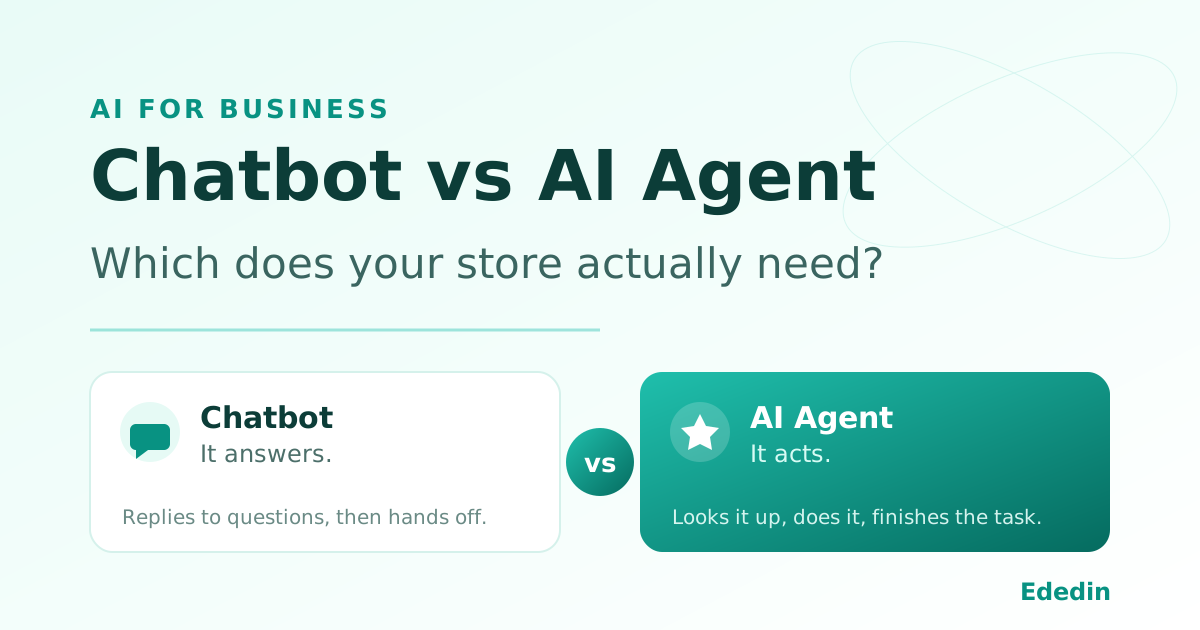
A chatbot answers. An AI agent acts.
A chatbot is a conversation tool. It talks to a customer, answers questions, and points them in the right direction. When it hits something it can't answer, it stops and hands off to a human.
An AI agent is a doer. It doesn't just tell a customer their order is delayed — it looks up the order, checks the shipping status, and sends the tracking update itself. It can take actions across your systems to actually finish a task, not just talk about it.
If you want the full breakdown of what makes something an agent, our guide on what an AI agent is goes deeper. This post is about choosing between the two for a store.
What a Chatbot Does Well
A good chatbot is perfect for the front desk of your store. It handles the flood of repeat questions so your team doesn't have to:
- "Where is my order?"
- "Do you ship to my country?"
- "What's your return policy?"
- "Is this available in size M?"
It's quick to set up, affordable, and takes real weight off your support inbox. For a lot of small stores, a smart chatbot is genuinely enough — especially if most of your customer questions are simple and repeat often.
The limit: a chatbot mostly knows. It can tell a customer what your return policy is, but it usually can't actually start the return, issue the refund, or update the order. When the task needs an action, it passes the ball to a human.
What an AI Agent Does Well
An AI agent is built for when talking isn't enough and something needs to get done. In an online store, that looks like:
- Looking up a specific order and giving a real status, not a canned reply
- Starting a return or exchange and updating the system
- Checking live stock before promising a customer an item is available
- Recovering an abandoned cart by messaging the customer and applying a discount
- Updating customer details across your tools without a human touching anything
The agent connects to your actual systems — your store, your orders, your inventory — and works across them. That's the real dividing line: an agent can complete the whole task, end to end, on its own.
The trade-off: because it plugs into your systems and can take real actions, an agent takes more thought to set up and needs proper guardrails so it only does what you want. It's more capable, and it asks a little more of you up front.
A Quick Side-by-Side
To make it concrete, imagine a customer says: "I want to return the shoes I bought last week."
A chatbot replies: "Sure! Here's our return policy and a link to start your return." Then it's up to the customer and your team.
An AI agent replies: "I found your order from last week — I've started the return for the shoes and emailed you the shipping label. Anything else?" And it actually did all of that.
Same question. One explains. One handles it.
So Which One Does Your Store Need?
You don't have to guess. A few honest questions usually make it obvious.
Start with a chatbot if:
- Most of your customer messages are simple, repeated questions
- You mainly want to cut down your support load
- You want something live quickly and cheaply
- A human is available to handle the trickier stuff
Step up to an AI agent if:
- Customers constantly need things done — returns, order changes, status lookups
- Your team wastes hours on tasks that follow the same steps every time
- You're losing sales to slow responses or abandoned carts
- You want the work finished automatically, not just routed to a person
And here's the practical truth: most stores don't have to choose forever. A very common path is to start with a chatbot for the front-line questions, see where it keeps handing off to humans, and then add agent abilities exactly where the real work is piling up.
Why This Matters Now
The gap between "answers questions" and "gets things done" is where a lot of stores quietly lose time and money. A chatbot that can't finish a return still leaves the work for your team. An over-built agent for a store that only needs FAQ answers is money spent on power you won't use.
Getting this choice right is really about matching the tool to the jobs that actually eat your day. If you're weighing this against simply hiring more support staff, our post on AI automation vs. hiring walks through that decision. And if you want to see the specific store tasks worth automating first, our 7 e-commerce workflows post is a good next read.
Getting Started
A good rule of thumb: list the five things your customers ask for most. If they're mostly questions, a chatbot will serve you well. If they're mostly tasks — things someone on your team has to go and do — you'll get far more value from an AI agent.
At Ededin, we help stores figure out exactly where that line falls and build the right fit around the tools you already use, so nothing feels bolted on or over-engineered.
Not sure which one fits your store?
Get a free AI consultation with the Ededin team and we'll look at your customer messages and point you to the right tool — no overselling.